Every institution has a website, a virtual tour, a WhatsApp channel and a counsellor on call. And yet, year after year, the single event that most changes a student's decision is still a room full of people. That is not nostalgia - it is how trust works.
Information is abundant. Judgement is scarce.
A student researching courses online today does not suffer from lack of information; they suffer from inability to evaluate it. Every college page claims excellent placements, world-class faculty and industry linkage. When all sources say the same thing, the student cannot rank them - so they default to whatever a relative or a coaching centre says. A fair breaks that deadlock by putting claims side by side, in the same hour, in front of the same person.
What only happens in a room
- Follow-up questions. A brochure cannot be interrupted. A person can be asked "but what about students who are weak in maths?"
- Body language as data. Confidence, evasiveness and pride are all legible in person and invisible in a PDF.
- Parent conversion. In most Indian families the decision is joint. Parents who attend leave with clarity that no forwarded link produces.
- Peer signal. Seeing hundreds of students asking similar questions normalises confusion and reduces isolation.
- Serendipity. Students routinely discover courses - design, hotel management, agri-business, paramedical - they did not know existed and would never have searched for.
The tier-2 and tier-3 reality
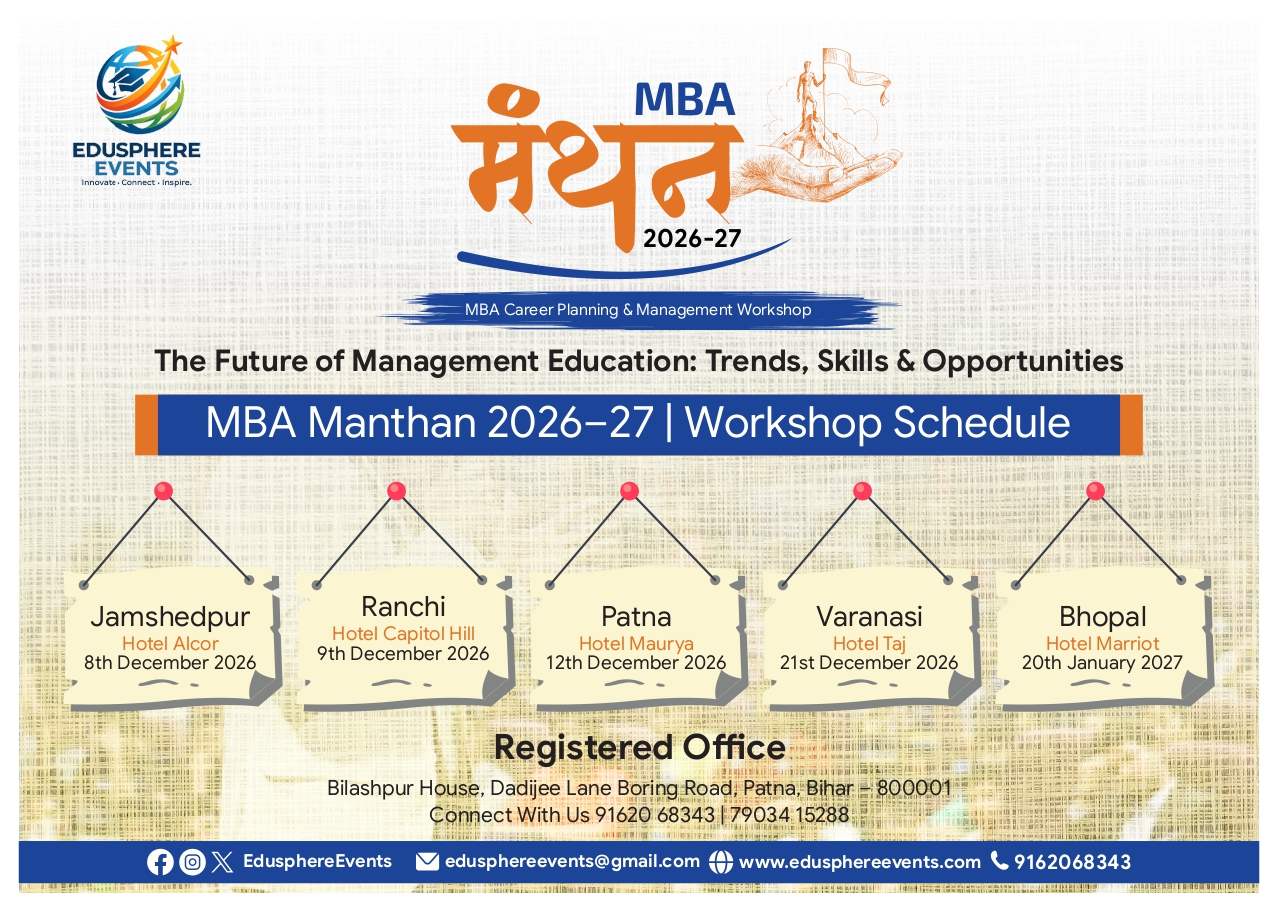
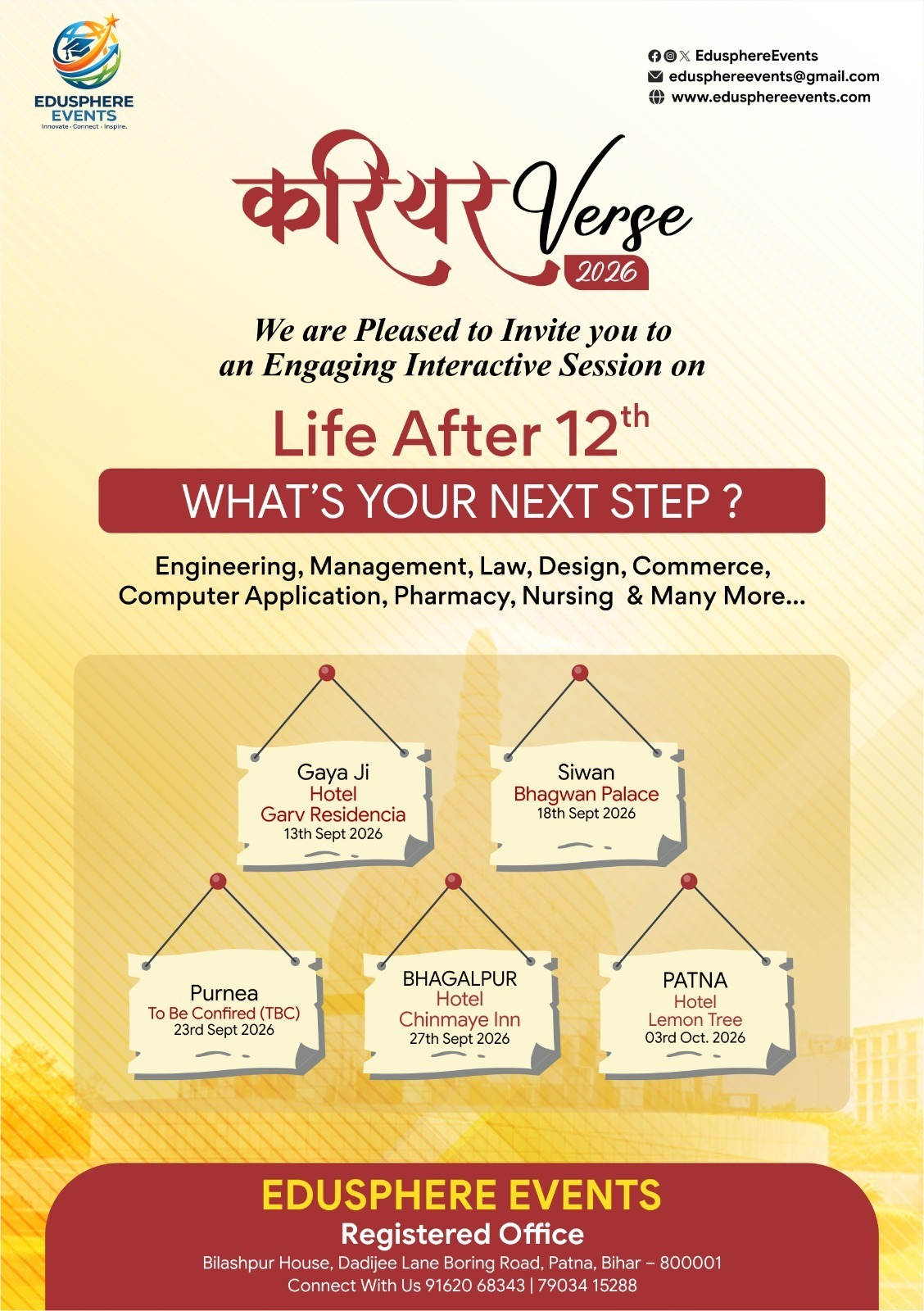
In metros, students visit campuses on weekends. In Gaya Ji, Siwan, Purnea or Bhagalpur, a campus visit means a day of travel and expense per college. Bringing twenty institutions to the student's own city is not a convenience - it is the difference between an informed decision and a guess. This is precisely why Edusphere builds its calendar around smaller cities first.
How to actually use a career fair
- Arrive with a written list of five questions. Ask every single stall the same five - comparison only works when the questions are constant.
- Visit three stalls you had not planned to visit. This is where discovery happens.
- Take notes immediately. After the eighth conversation, memory blends everything together.
- Collect names, not just brochures. One named contact who remembers you is worth more than a bag of glossy paper.
- Attend the sessions, not just the stalls. Panel talks reveal industry direction that individual counsellors will not volunteer.
- Debrief the same evening. Rank your options while impressions are fresh, with whoever is helping you decide.
Not offline versus online - offline after online
The strongest sequence is digital research first, physical verification second, digital follow-up third. Use the internet to build a list. Use the fair to test it. Use email and calls to close it. Institutions that treat events as their verification layer, rather than an advertising layer, consistently see better quality applications.
Find your nearest Edusphere career fair on our upcoming events page and walk in with your five questions ready.